The plan, in full
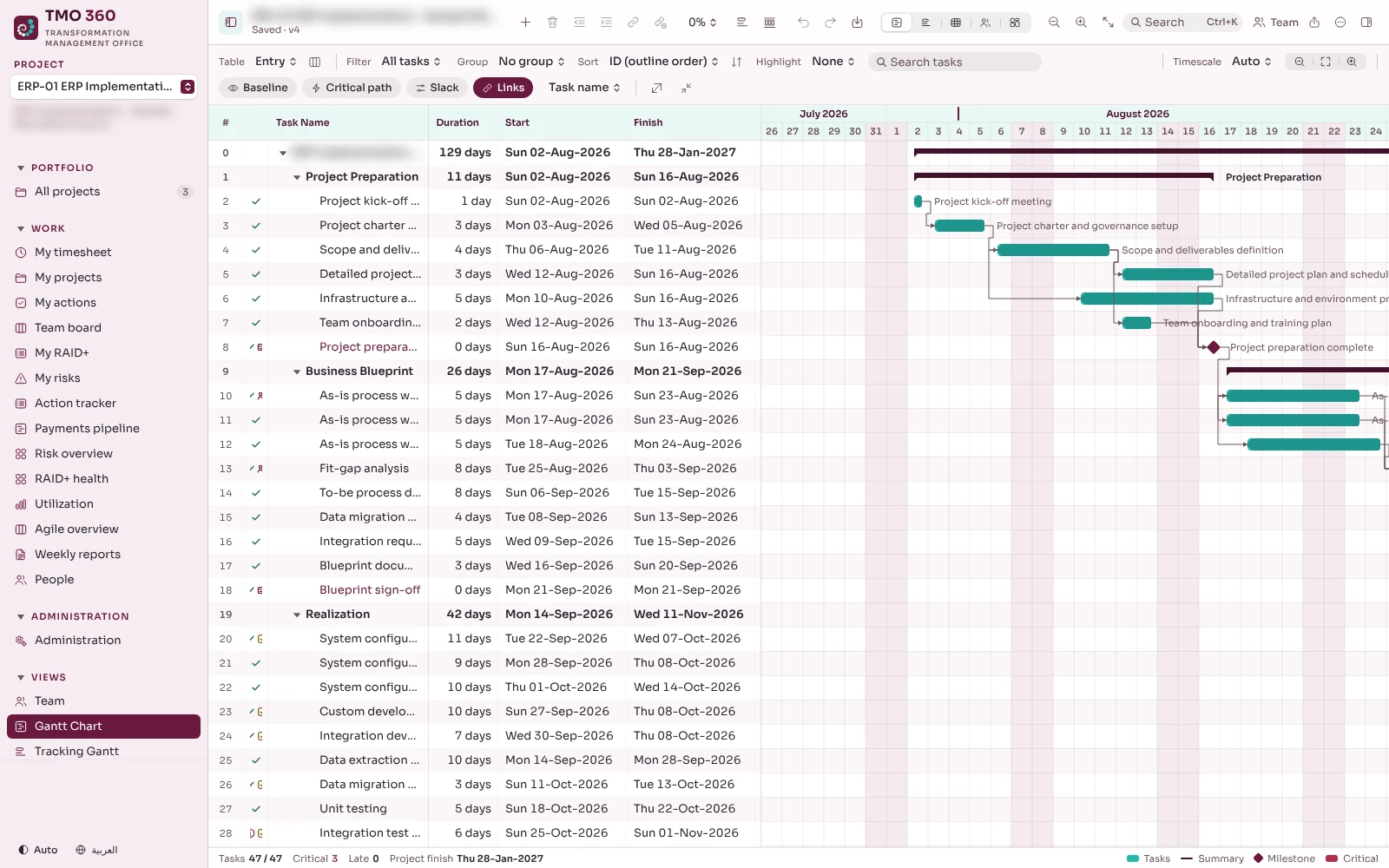
A complete schedule for every project, with the critical path, the baselines and the resources behind each task.
Transformation Management Office
Delivery, connected from plan to cash.
TMO 360 is GTech’s transformation management office. It runs the portfolio, every program and project, and everything around them in one connected system: the schedule, risks and issues, meetings and stakeholders, people’s time, client acceptance and payments. Every record is linked to the plan, so the dashboards and the weekly report build themselves.

A typical transformation office keeps the plan in one tool, the risks in a spreadsheet, the minutes in documents, the actions in e-mail and the payments with Finance. Each is current somewhere and none agrees with the others, so every weekly report is assembled by hand and every steering committee starts by reconciling the numbers.
What decides delivery sits in the gaps: an action agreed in a meeting that never reached the plan, a risk that became an issue without anyone saying so, a deliverable waiting for the client’s acceptance that holds up an invoice. TMO 360 closes those gaps by design.
| Task boards and scheduling tools | TMO 360 | |
|---|---|---|
| Built for | Teams managing their own tasks | The transformation office, the portfolio and top leadership |
| Plans | Task lists, boards or a schedule, one project at a time | A full schedule with critical path, baselines and resources, across the portfolio |
| Governance | Risks and issues kept elsewhere, if at all | Risks, assumptions, issues, dependencies, decisions and actions, linked to the plan |
| Communication | Meetings and minutes in documents and e-mail | A communication plan, its meetings, minutes, decisions and actions in one place |
| Contract to cash | Outside the tool | Deliverables, client acceptance and payment milestones, from submission to payment |
| Reporting | Assembled by hand each week | Built from the live record, in Arabic or English |
Six connected modules share one plan, one team and one record of every change, in Arabic and English.
Every project as cards, a table or a timeline, each with a full schedule: critical path, calendars, resources, cost and baselines. Plans open from Microsoft Project and Excel and save back to them.
A risk register with initial, current and target ratings and weekly reviews by the owners, beside the assumptions, issues, dependencies and decisions of each project.
A communication plan of meeting series with minutes, decisions and actions. Every action has an owner, a due date and a task in the plan, followed planned against actual.
Deliverables followed through the client’s review rounds to the certificate of completion, and payment milestones from development to invoice and payment, on each client’s terms.
Teams from the company directory, roles checked on every request, and timesheets filled from the plan, so a week is submitted in two clicks and approved hours move the plan.
Scrum or Kanban beside the plan: backlog, sprints, boards, releases and incidents, with sprints and releases carried into the schedule.
A complete schedule for every project, with the critical path, the baselines and the resources behind each task.
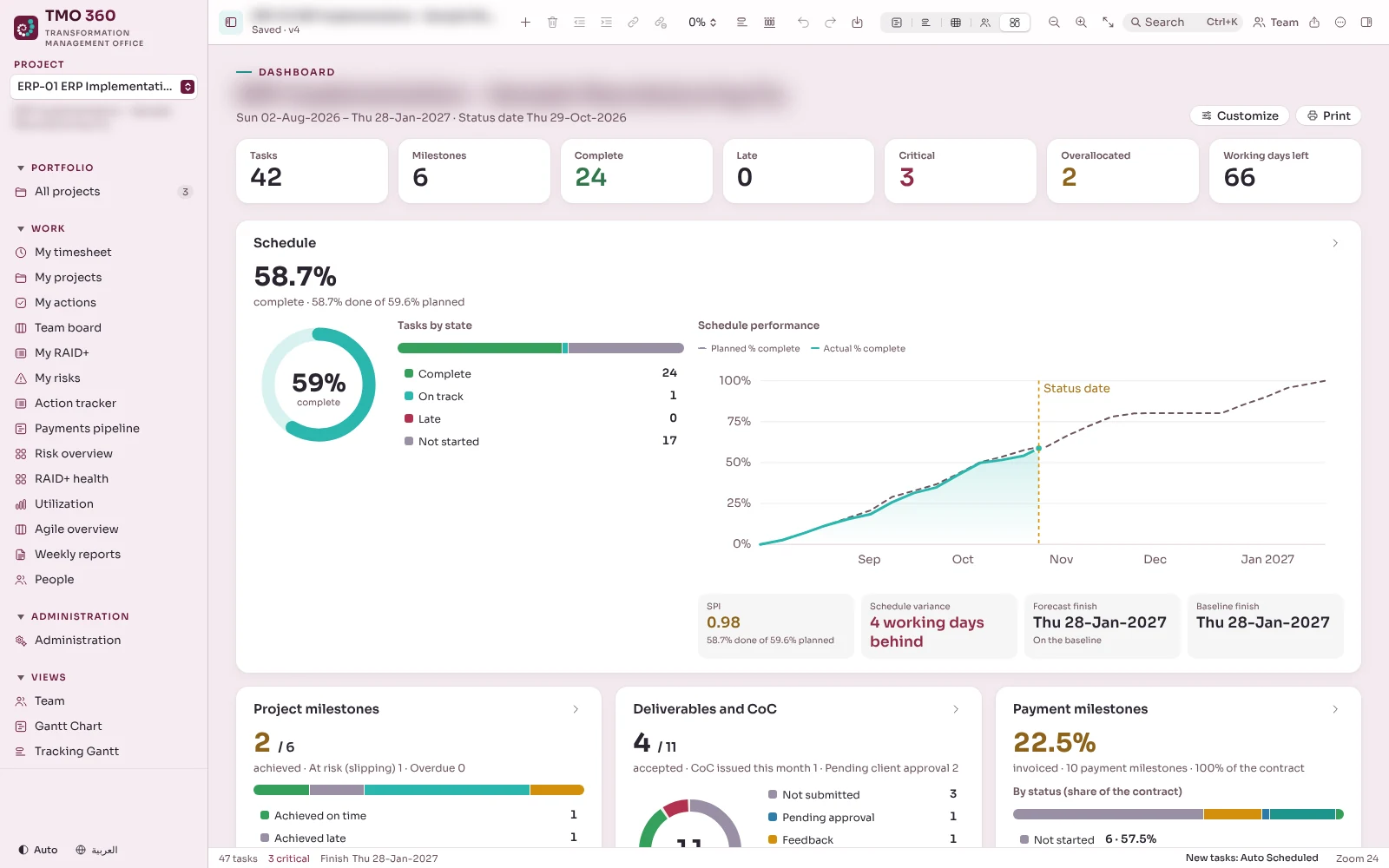
One card per dimension, from schedule and milestones to deliverables, payments, risks, actions and meetings, each opening the view behind it.
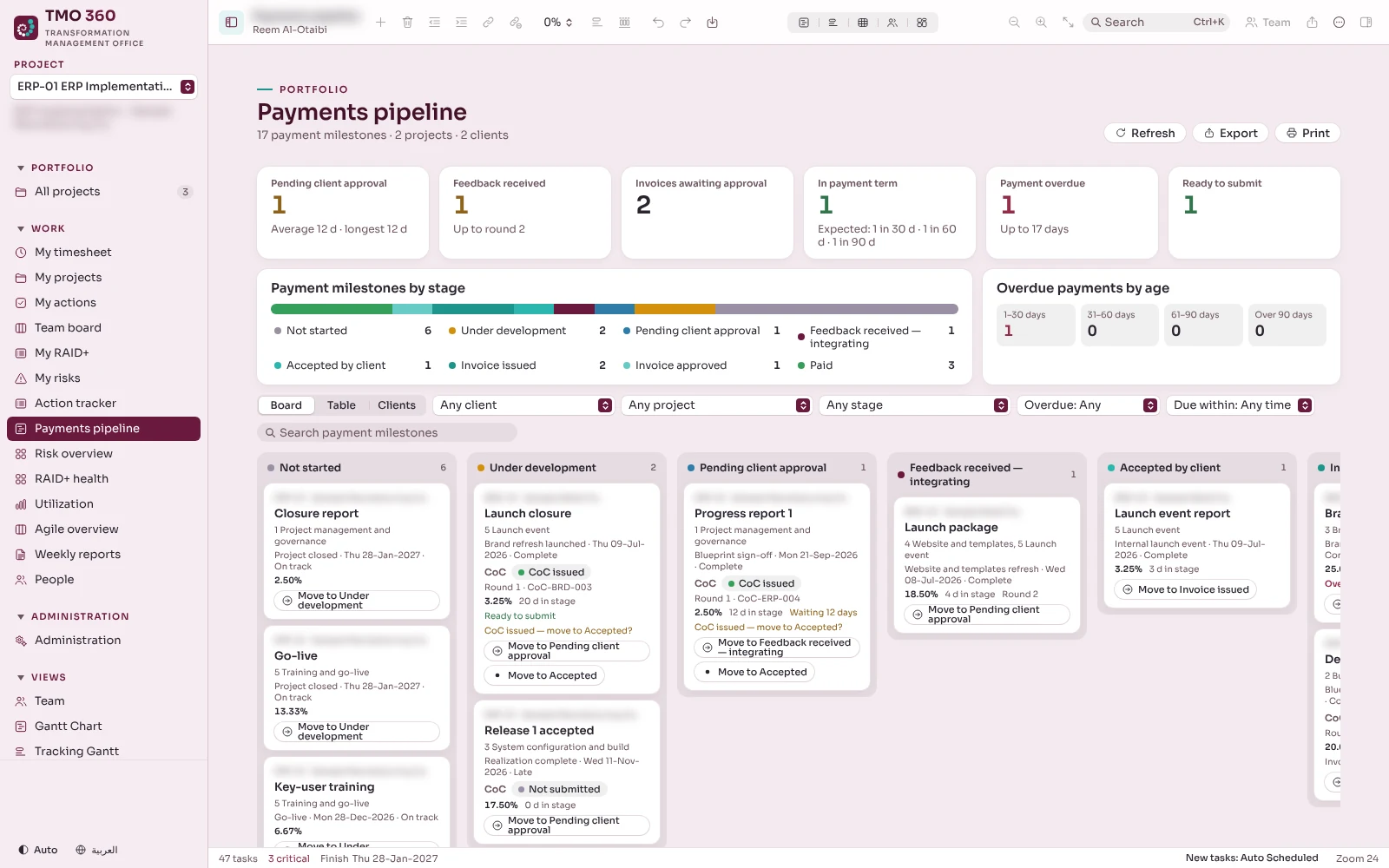
Every payment milestone of the portfolio by stage, from development through client acceptance and invoice to payment, with what is overdue and for how long.
An action agreed in a meeting becomes a task in the plan. A risk’s response is an action with an owner, and a risk that occurs becomes an issue. Payment milestones sit on the plan’s own milestones and follow them through client acceptance to invoice and payment. Approved hours move the progress of the task they were logged against.
Because everything is linked, nothing is retyped and nothing is reconciled: the dashboards, the portfolio and the weekly report read the same live record. The office spends its time on decisions, not on reporting.
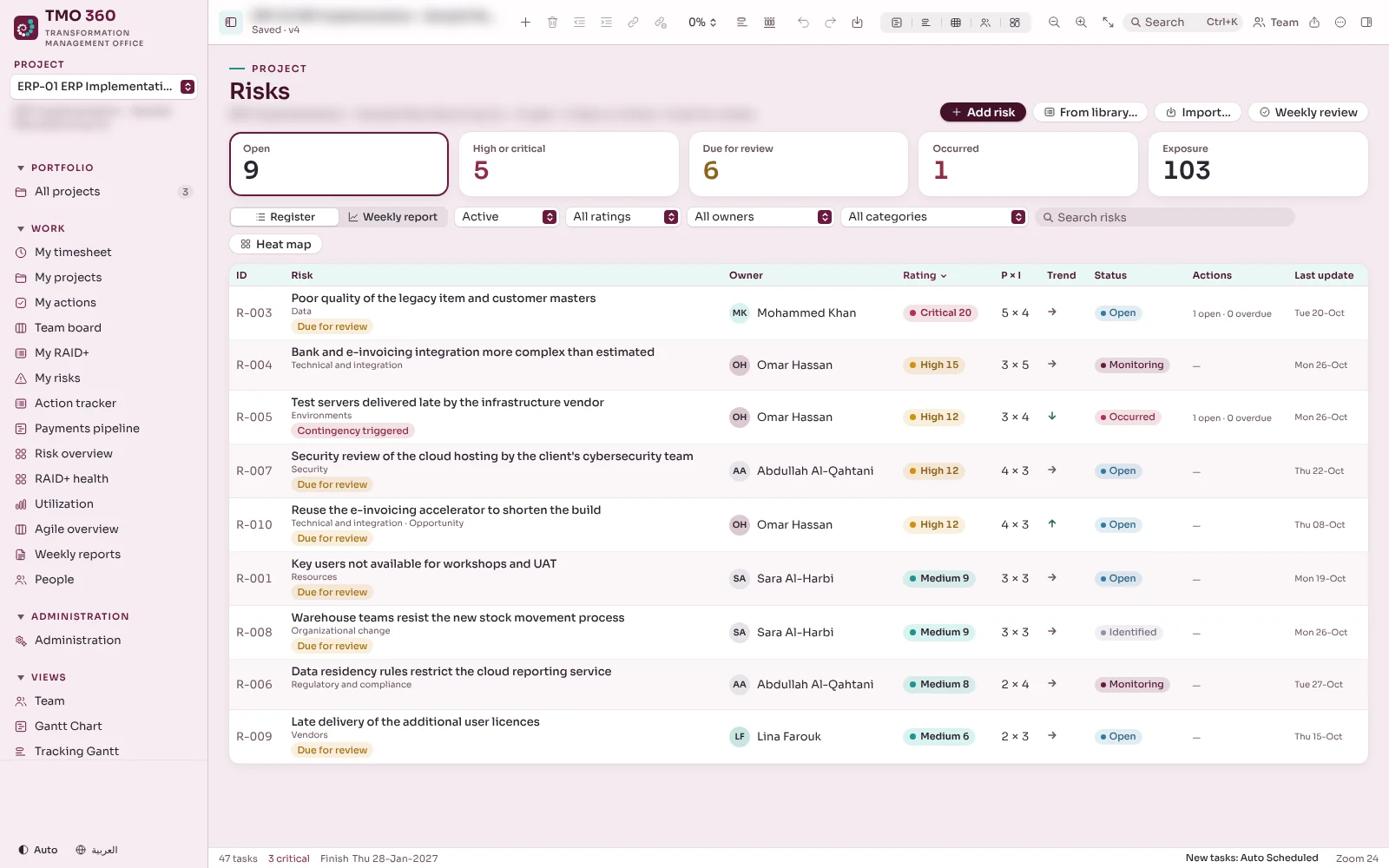
Each risk is rated, owned and reviewed every week, with its response actions in the plan and the ones due for review flagged.
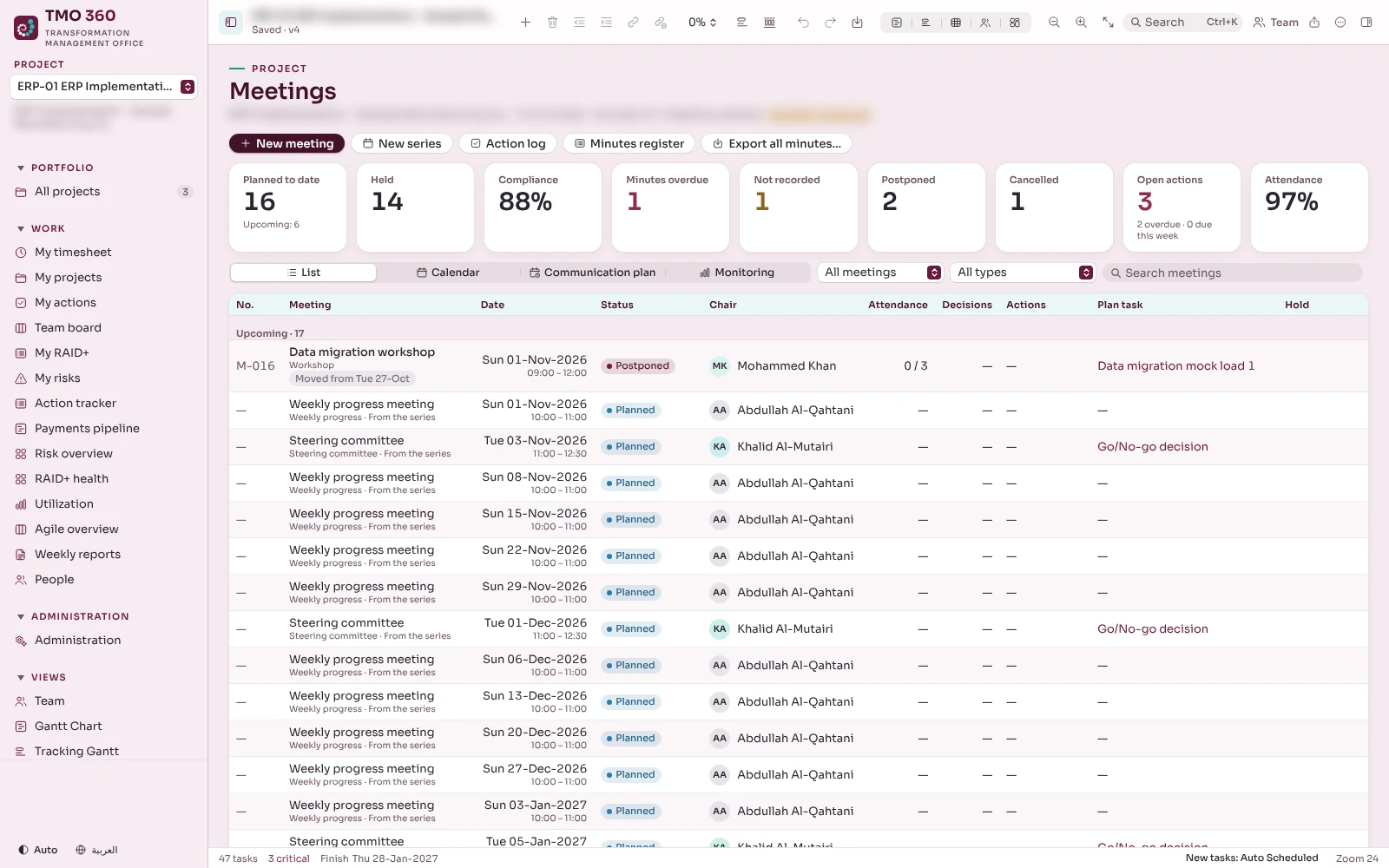
Meeting series planned, held and minuted, with attendance, decisions and the actions they produced.
Built from the plan and every module for the period you choose, in Arabic or English, ready to issue.
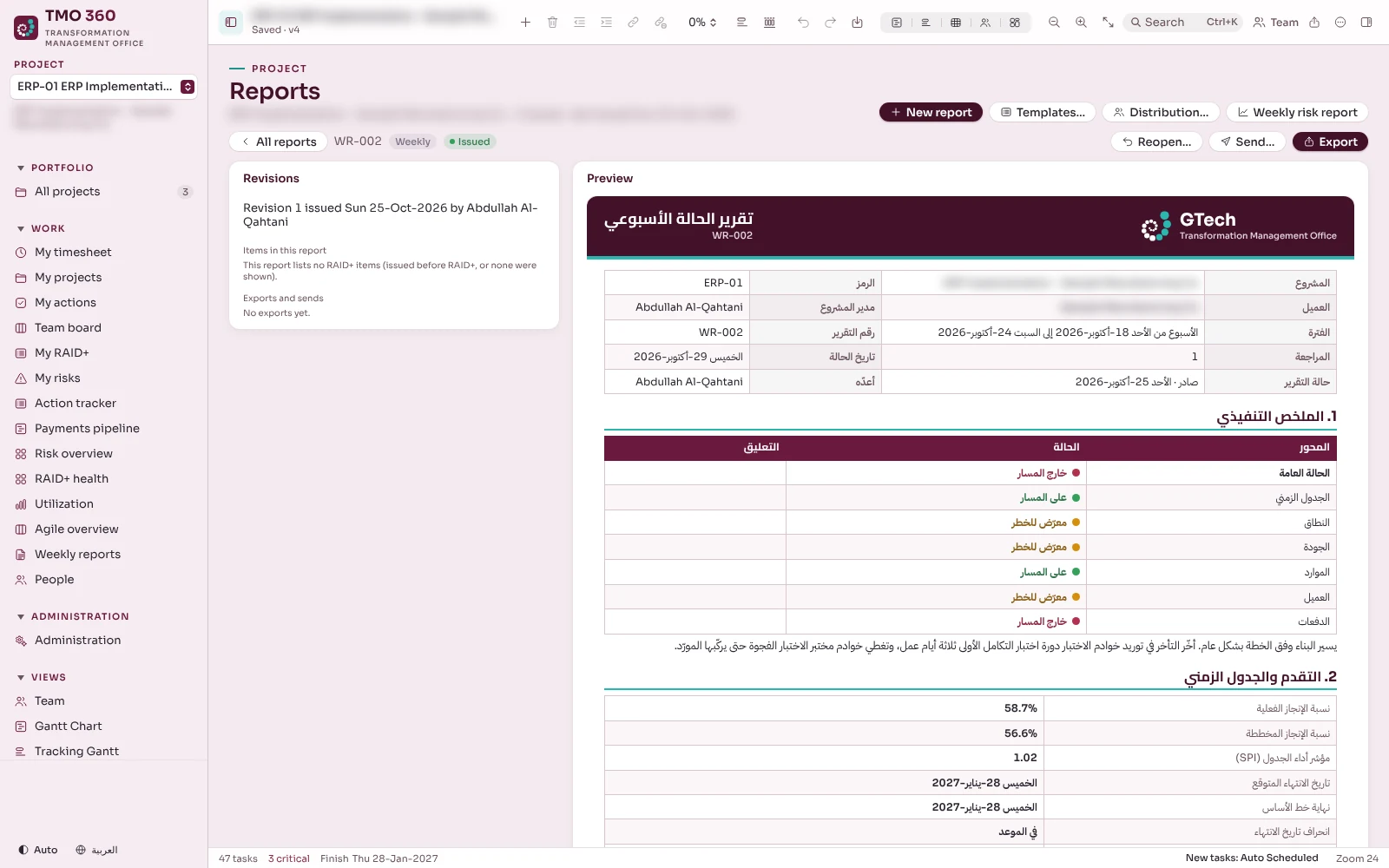
The weekly status and risk reports are assembled from the live record, not from a week of chasing updates.
Every action has an owner, a date and a place in the plan, and overdue actions are escalated by e-mail on their own.
Client acceptance and payments are followed with the delivery, so a slip in one shows in the other.
Several people work on one plan together, every change is versioned and logged, and every project is backed up each night.
GTech built TMO 360 for its own delivery and runs its projects on it, in Arabic and English, with the Saudi working week and calendar built in.
GTech sets TMO 360 up with your office: the portfolio, the roles, the report templates and the reporting rhythm, so it carries your methods from the first week.
TMO 360 serves the offices that answer for delivery, wherever they sit.
For ministries, authorities and agencies running national and organizational programs across many entities and vendors.
For groups and companies running portfolios of projects across business units, from strategy to operations.
For consulting, technology and contracting firms that deliver to clients and bill on milestones and acceptance.
Arabic and English
A working session shows TMO 360 on sample projects, and how your own portfolio, meetings and reports would run in it.